

Understanding Your Mold Report
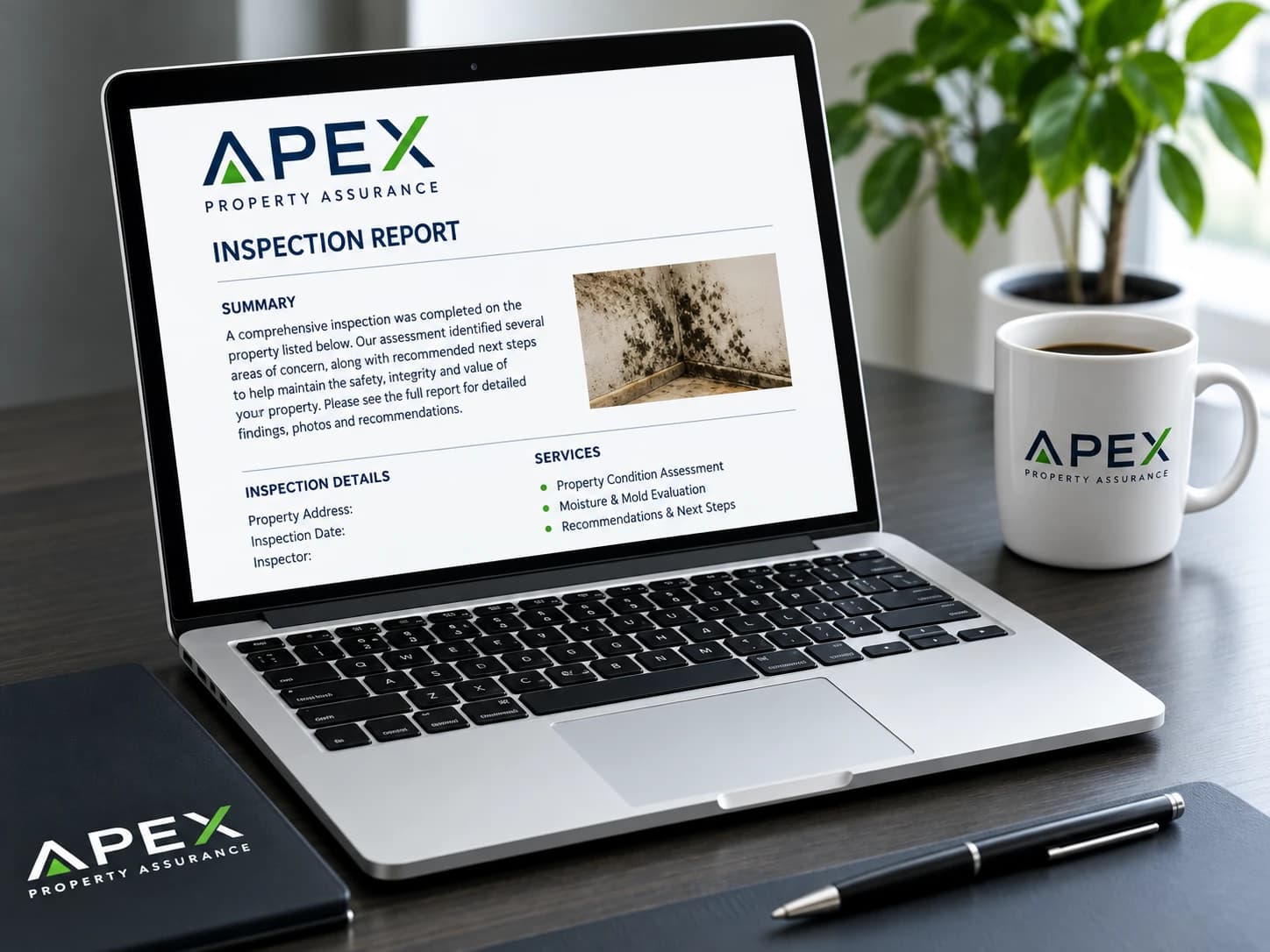
Your inspection report is built to be read without a science background. It starts with a summary: what was inspected, why, and the overall conclusion, whether that is "no concerning mold found" or a specific list of issues to address.
The findings section lists each area checked and what was observed there, paired with photos so you can see exactly what was found. If lab samples were taken, the results show the type of mold identified and its concentration compared to normal outdoor levels, that comparison is what actually indicates whether there is a problem, not just the presence of any mold at all, since mold spores exist everywhere in small amounts.
Recommendations are prioritized by urgency. Some findings need immediate attention: active leaks or elevated spore counts in living spaces. Others are lower priority, like minor condensation that a small ventilation fix would resolve.
If remediation is recommended, the report gives you enough detail to get accurate quotes from remediation companies without them being able to oversell the scope of work, since you already know what was actually found.
Keep the report on file. It is useful for real estate transactions, insurance claims, and as a baseline if you ever want a follow-up inspection to confirm a fix worked.